
A business can be satisfied with the system that runs its operations and still be dissatisfied with how easily people can get useful information from it.
That distinction matters. Operational-system reliability and reporting experience are related, but they are not the same problem. An organisation may trust IBM i — and the applications that already sit on it — while still wanting a clearer way for finance, operations and management to explore and report on the information held there.
The question this article answers is practical: can you improve reporting and business intelligence without replacing IBM i or the ERP systems the business already relies on?
The system can work while the reporting experience doesn’t
When people say they need “better reporting,” they are not always saying the operational platform has failed. Often they are describing friction in everyday information work: waiting for answers, reshaping exported data, or relying on a small number of technical people to produce routine views.
In that situation, three ideas are easy to conflate:
- Operational-system reliability — whether the platform and applications continue to run the business.
- Reporting experience — how clearly people can see performance, exceptions and detail.
- Access to useful information — who can explore approved information, and how quickly they can answer a new question.
A team can be confident about the first and still want progress on the second and third. Treating those as identical projects can push an organisation toward a much larger change than the reporting requirement itself demands.
What does modernising reporting actually mean?
In practical terms, reporting modernisation usually means making operational information easier to explore, reuse and share — without asking every user to become a query specialist.
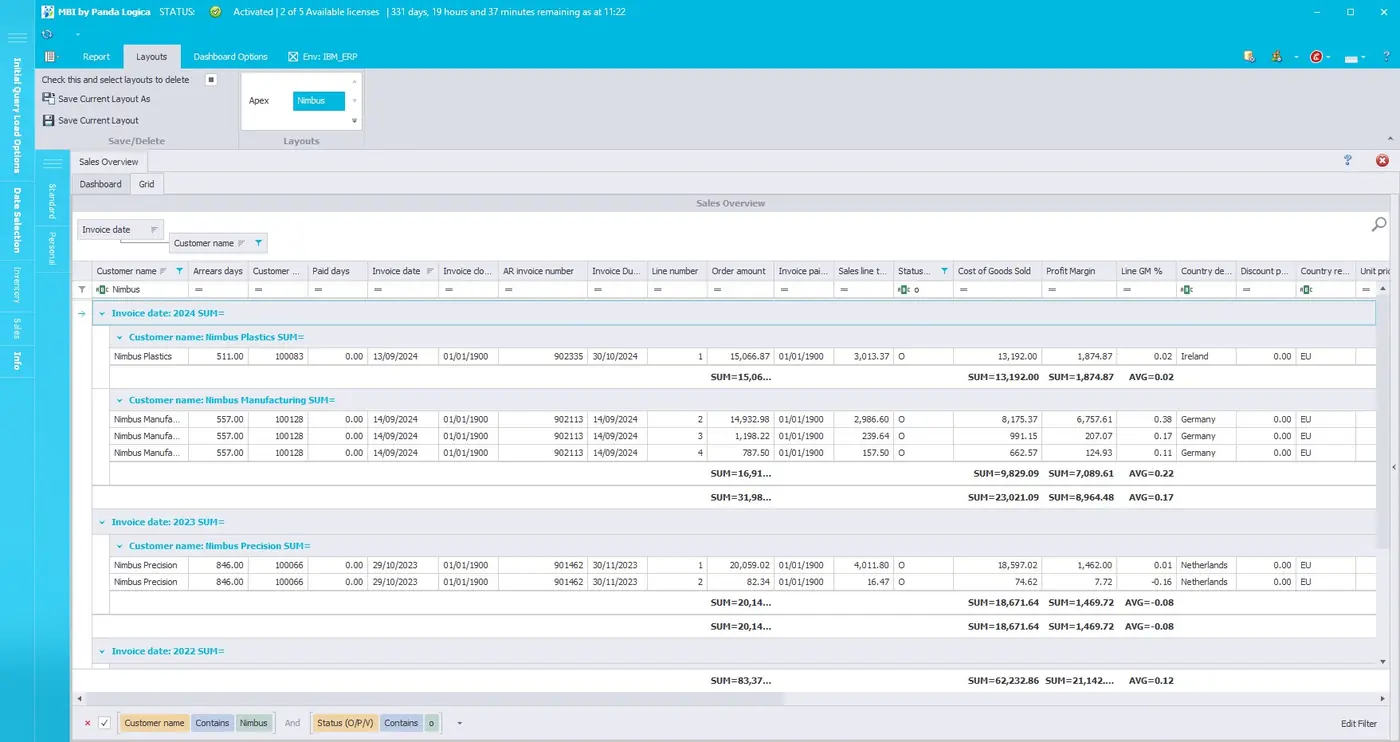
That can include presenting information as clear dashboards for overview and as operational grids for line-level investigation; allowing people to filter, group and summarise within approved reports; saving preferred layouts for repeated use; and moving from a selected value into a related report when the next question is already known.
None of those outcomes requires the conclusion that IBM i itself must be replaced. They describe a better working experience over information the organisation already holds.
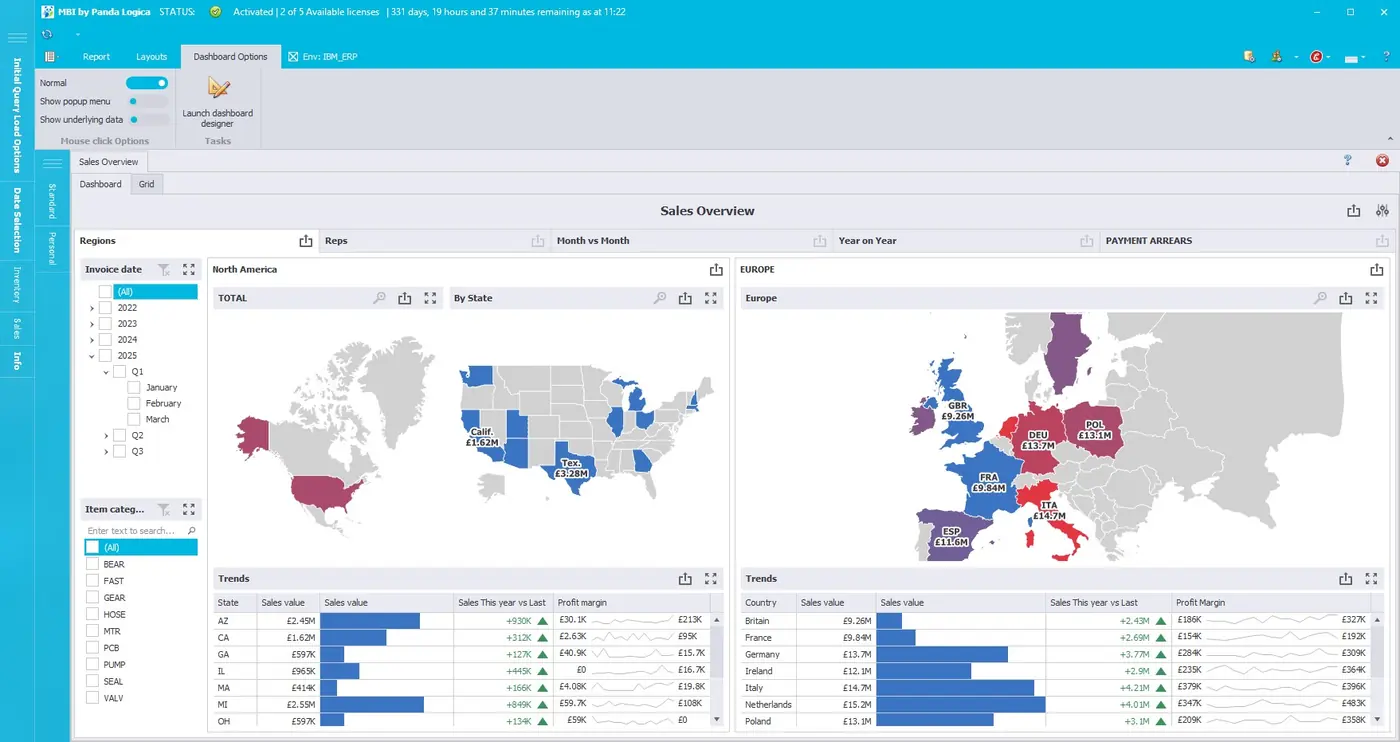
Separate the reporting experience from the operational system
One useful way to think about the problem is as a reporting layer alongside the systems that already run the business.
The operational system continues to manage day-to-day work. A reporting layer gives authorised users another way to work with the information they need — through reusable reports, dashboards and grids — while administrators retain control of the reporting foundation.
Connectivity and deployment details vary by environment. The important architectural idea for this decision is simpler: reporting modernisation can be approached as an information experience project, not automatically as a platform replacement project.
Replacing the ERP may be the wrong question
ERP or platform replacement can be the right decision for some organisations. This article does not argue that replacement is inherently bad, and it does not claim that every reporting problem can be solved independently of platform change.
If the business requirement is primarily better reporting — clearer views, fewer ad-hoc exports, more consistent answers for authorised users — the organisation should determine whether reporting can be improved independently before assuming an ERP or platform replacement is required.
Reporting modernisation and platform replacement may sometimes be connected. They are not automatically the same project. Mixing them can expand scope, cost and risk before the reporting need has been properly framed.
Better access should not mean uncontrolled access
Improving access for business users does not mean opening uncontrolled database access. A durable reporting approach usually separates two responsibilities:
- Administrators define the reporting structure — sources, tables, fields, relationships, calculated values and access rules.
- Authorised users work within approved reports: opening dashboards and grids, filtering and grouping, saving layouts and following related reports where permitted.
That governed model is what makes broader access practical. Users get flexibility inside a controlled boundary; administrators keep the reporting foundation consistent and manageable. Unrestricted access is not the goal.
Governance deserves its own deeper treatment — particularly for IBM i environments where IT accountability matters. That is a natural follow-on topic: admin-governed reporting for IBM i environments.
Where MBI fits
MBI — Modern Business Intelligence — is PandaLogica’s reporting and business-intelligence product. It is intended to help organisations work with operational data from environments including IBM i and SQL Server through dashboards, operational grids and reusable reports, without replacing the systems that already run the business.
In practice, that includes presenting the same report as a dashboard overview and as a detailed grid; filtering, grouping and summarising within grids; saving layouts for repeated use; moving into related reports from selected values; and administering a reporting model with role-based access for users, groups and roles.
MBI is a Windows desktop application. It is approaching commercial launch. For a full product evaluation — capabilities, structure and trial options — see the MBI product page.
MBI is being developed by a team with substantial IBM systems experience. Paul created the original form of MBI approximately four years ago and has more than 20 years of IBM systems experience. James also has more than 20 years of IBM systems experience. Aaron brings more than 15 years across IT and business development. About PandaLogica
IBM i, AS/400 and iSeries terminology
IBM i is the current name for the platform. Many organisations and searchers still use historical names from the same lineage, including AS/400, AS400, iSeries and System i. Those names remain useful for recognition; they do not change the underlying decision discussed here.
For the broader IBM i reporting and business-intelligence resource — problem framing, product fit and next steps — see IBM i reporting with MBI.
A practical decision checklist
Before treating reporting frustration as a platform replacement project, it is worth answering questions such as:
- Is the operational system actually the problem — or is the reporting experience?
- Is the primary requirement better reporting and clearer access to existing information?
- Who needs access to which information?
- What should business users be able to explore themselves within approved views?
- What should remain controlled by administrators?
- Which reports and layouts need to be reusable across teams?
- What access controls are required for users, groups and roles?
- Does the business actually need an ERP or platform migration?
- Or does it need a better reporting experience over the system it already uses?
The answers will not always point to the same solution. The value of the checklist is to keep reporting modernisation and platform replacement as separate decisions until the evidence says otherwise.
Next steps
If your organisation is evaluating how to improve reporting while keeping IBM i in place, start with the IBM i reporting resource, then evaluate MBI if the product approach fits.
Prefer to talk it through? Contact us about a demonstration.